How to Recover After a Stroke: Practical Tips for Patients and Families
A stroke, also known as a cerebrovascular accident (CVA), is an event that can significantly change a person’s life. After the acute phase of treatment, patients and their families often ask how recovery can be supported and what can be done to help restore lost functions.
Recovery after a stroke is a process that requires time, patience, and cooperation among several healthcare professionals. The good news is that the brain has the ability to regenerate and adapt.
Every Recovery Is Individual
Some patients experience significant improvement within weeks, while others may need months or even years. The difference depends mainly on:
• the extent of brain damage
• the patient’s age
• overall health condition
• how quickly treatment was provided
• consistency of rehabilitation
Comparing recovery with other patients is therefore not helpful.
Rehabilitation Is Essential
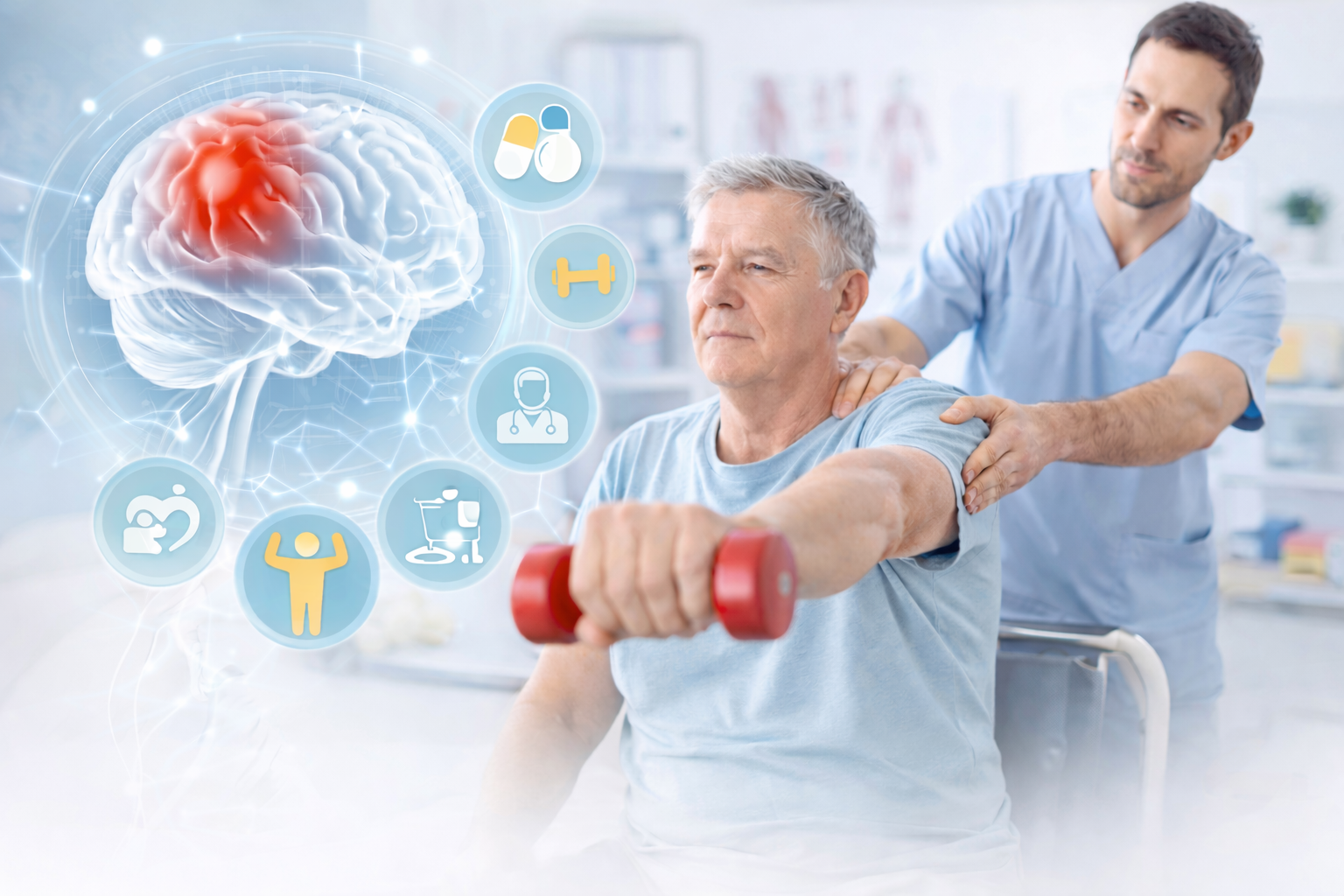
The most important factor in recovery is rehabilitation. Repeated movements and training help the brain form new neural connections and restore lost functions.
Rehabilitation may include:
• physiotherapy
• speech therapy
• occupational therapy
• balance training
• cognitive exercises
Regular and long-term practice is essential.
The Importance of Daily Activity
Even simple activities are meaningful. Dressing, walking, eating, or communicating stimulate the brain and support neuroplasticity.
Even small improvements represent success.
Psychological Well-Being and Motivation
A patient’s mental state significantly influences recovery. Depression or frustration are relatively common after a stroke.
Support from family, encouragement, and realistic goals help maintain motivation.
Sleep and Brain Recovery
Quality sleep is essential for brain recovery. During sleep, important processes of neural repair take place.
Fatigue after a stroke is common and should be respected.
Diet and Lifestyle
A healthy diet supports the regeneration of both the body and the brain. It is recommended to include:
• plenty of fruits and vegetables
• high-quality proteins
• healthy fats
• reduced intake of salt and sugar
Moderate physical activity supports blood circulation and recovery.
Supporting Brain Regeneration
Modern research is also focusing on ways to support the brain’s natural regenerative processes. Some formulations are being studied for their potential to support neuroplasticity.
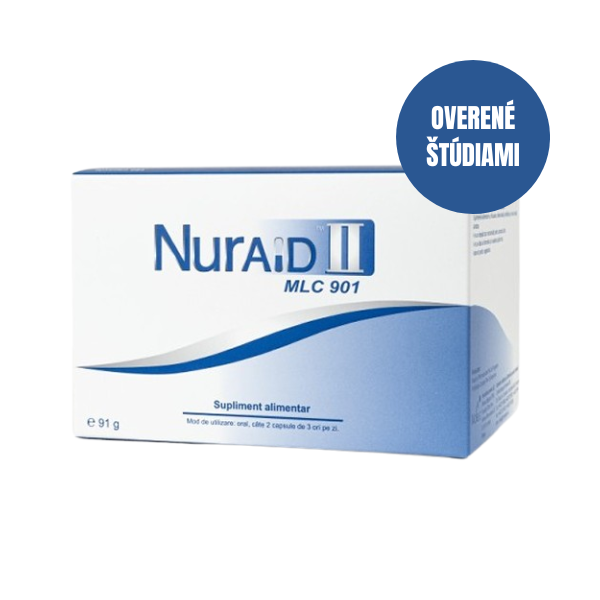
NurAiD II™ is among the clinically studied formulations aimed at supporting brain regeneration and neurological recovery after stroke. It is used as a complement to rehabilitation and physician-recommended treatment.
Patience Brings Results
Recovery after a stroke is gradual. Progress may be slow, but it is often real. The brain has a greater capacity for regeneration than many people realize.
Buy